STORY

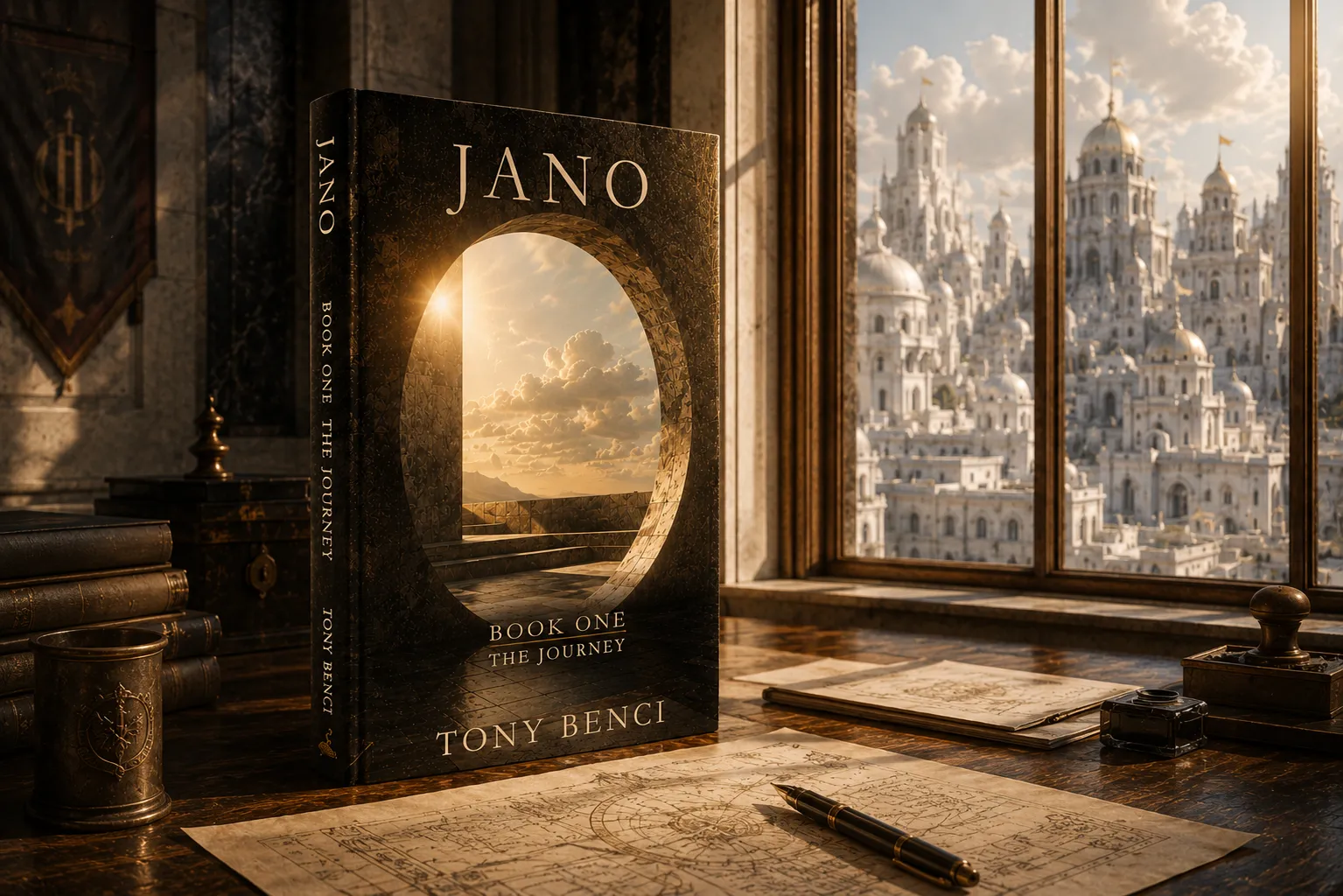
Jano’s story begins quietly, in the small village of Truewood, where the wider world seems distant and largely unimportant. But a warning, an old promise and a journey north soon carry him far beyond everything he has known.
Across roads, seas, cities and unfamiliar lands, Jano encounters warriors and farmers, sailors and mages, kindness and cruelty, ancient rivalries and powers he does not yet understand. What begins as a young man’s journey to the School of the Right gradually becomes something far greater — though Jano may be the last to realise it.
THE STORIES IN THE BOOKS
Each book tells its own part of Jano’s journey, following the people, places and events that shape the world around him. Together, these stories form a much larger tale — one that will unfold as Jano’s journey continues.
Book One - The Journey
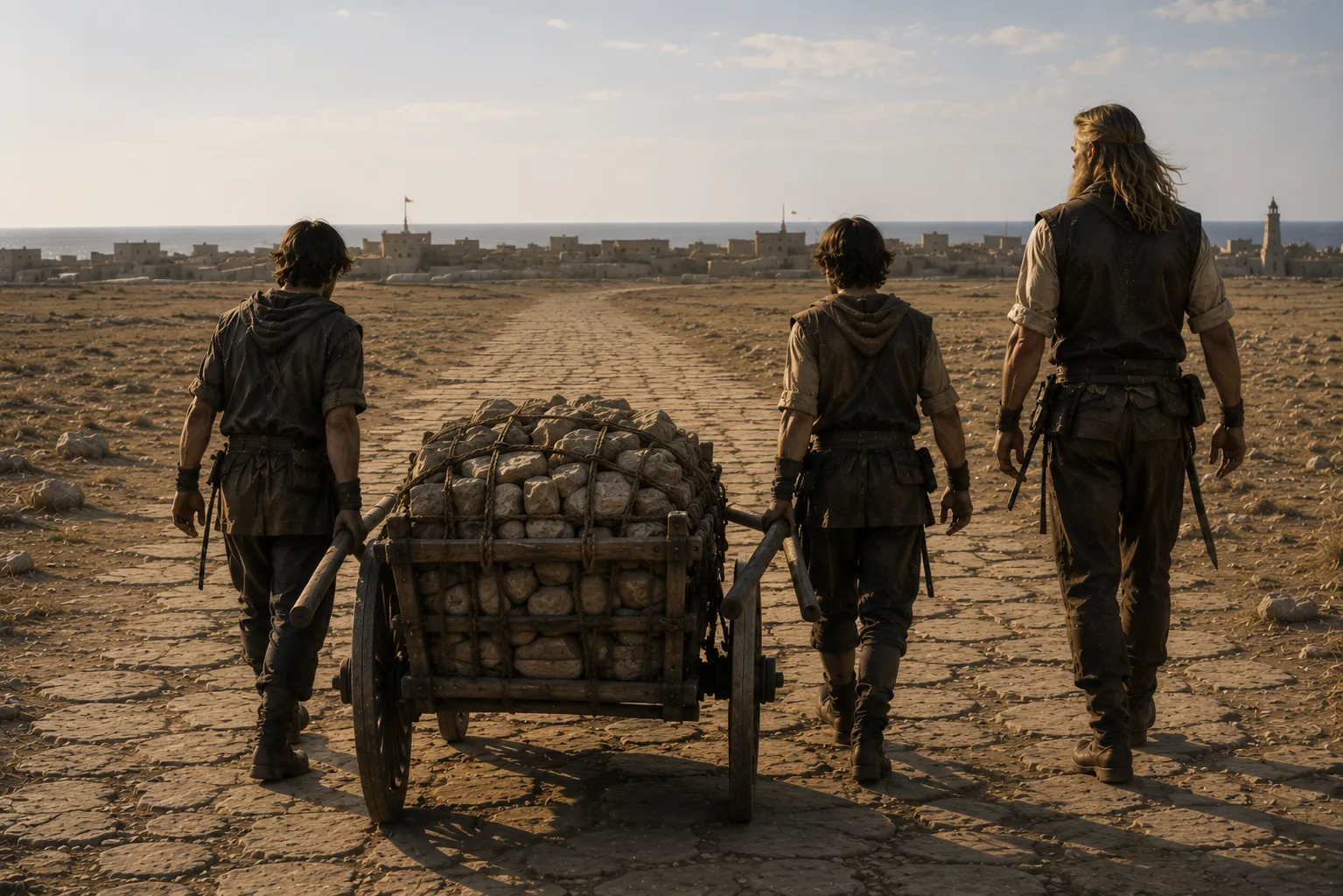
Jano’s journey begins in Truewood, with a warning that sends him north towards the distant School of the Right. What follows is a passage across the Centre Lands and Handor Sea, through unfamiliar towns, islands and communities, accompanied by people who will leave their mark upon him.
Along the way, Jano encounters friendship and cruelty, hardship and unexpected kindness, while elsewhere older powers begin to move. By the time he reaches the School, the simple journey he thought he was making has become the beginning of something much greater.
Jano and his household — Truewood, the Sou' Reaches
Before there was a journey, there was Truewood.
Here we meet the people who shaped Jano’s earliest years: his family, his teachers, his friends and the familiar faces of village life. Truewood is a small place, comfortably removed from the affairs of the Centre Lands, where people know their neighbours, work is shared and the rhythms of life have changed little in generations.
For Jano, it is simply home. There are chores to be done, lessons with Old Magla to endure, friends to find trouble with and a family whose expectations of him are considerably more immediate than anything happening hundreds of miles away. The world beyond the Sou’ Reaches exists mostly in stories and in the memories of those who have travelled farther than he has.
Then a dying Watcher reaches Truewood carrying a warning meant for Old Magla.
Old obligations are remembered, uncomfortable truths begin to surface and a decision is made that Jano himself barely understands. The people who have protected and taught him must finally prepare him to leave them.
Truewood is where Jano’s story begins — but it is also the first thing he must leave behind.
Dannid and the road to Talmi
Leaving home is only the beginning.
With Dannid beside him, Jano travels north through a world that is larger, rougher and considerably less predictable than Truewood. The road introduces him to inns and travellers, carters and traders, villages and strangers, and to the thousand small uncertainties that come with being somewhere nobody knows your name.
Dannid, however, is no ordinary travelling companion. A Roamer warrior with a past of his own, he knows the roads and understands people in ways Jano does not. He can be teacher, protector and friend, although his lessons are rarely delivered as lessons and his solutions to problems do not always resemble those Jano might have chosen for himself.
Talmi provides the first real test of that difference.
There Jano discovers that cruelty does not always announce itself and that those with power over others are not necessarily entitled to it. Dannid, meanwhile, demonstrates his own rather particular understanding of justice, direct, practical and unconcerned with ceremony.
For Jano, the journey towards the Handor Sea becomes his first education in the world beyond Truewood: a place capable of generosity and ugliness in surprisingly equal measure.
Aboard the Elvira
For the first time in his life, Jano goes to sea.
The Elvira is no grand vessel carrying princes or armies. She is a working island trader, carrying goods and people between the scattered communities of the Handor Sea. Her decks introduce Jano to another kind of world entirely, one governed by wind, weather, tides and the competence of those who make their living upon the water.
Captain, crew, passengers and travellers form a small community of their own. There are friendships to be made, stories exchanged and the routines of shipboard life to be learned, while each new landfall brings another glimpse of places Jano had previously known only as names.
For Dannid, the voyage carries its own memories and concerns. For Jano, almost everything is new.
Yet the Elvira becomes more than simply the means by which they travel north. The days aboard her give Jano time to watch and listen, to encounter people whose lives are entirely different from his own, and to discover how quickly strangers can cease to be strangers.
Some encounters last only until the next port. Others leave something behind.
And occasionally, a journey creates friendships that neither distance nor time will quite manage to end.
Greater Irom, Guamaland and Kefa
The Elvira carries Jano through communities scattered across the Handor Sea, each with its own customs, occupations and ideas about what matters.
Greater Irom, Guamaland and Kefa are not merely stops upon the voyage. Each introduces Jano to people whose lives have been shaped by very different circumstances from those of Truewood. Craftsmen and traders, labourers and carters, families and strangers all become part of his growing understanding of the world.
There are practical lessons here as well. Work has value, hospitality can come from unexpected places and dignity has remarkably little to do with wealth or position. On Kefa, among stone, carts and hard physical labour, Jano again finds himself drawn into the lives of people he might otherwise have passed without ever knowing.
But another thread is beginning to emerge.
Not everyone Jano meets is quite what they first appear to be. Chance encounters sometimes seem a little too convenient, words carry meanings he does not recognise and occasionally someone knows rather more about him than any stranger reasonably should.
Jano continues towards the Centre Lands believing that he is simply making his way to the School of the Right.
Others, it seems, may already know that his journey means considerably more than that.
The travelling Master and the Seeking Power
Long before Jano understood what he was, someone else had already recognised it.
Beyond Jano’s immediate journey lies another story, older and far less visible. Somewhere across the Centre Lands, a Travelling Master is searching — following the Mage Winds and the faint traces of a power that has appeared where no such power was expected to exist.
It is not an easy search. What he senses is distant, elusive and unlike anything that should belong to an untrained boy in a forgotten village of the Sou’ Reaches. Yet the power is there. It surfaces, disappears and surfaces again, drawing the Master onwards as he tries to discover its source.
Others are moving as well.
Messages are carried, old obligations remembered and preparations made by people Jano has never met. Some understand what is being sought; others know only the small part they have been asked to play. Across distance and through the Mage Winds, their actions begin to converge upon a young man who remains almost entirely unaware of them.
Jano believes his destination is the School of the Right and that his journey began when he left Truewood.
For the Travelling Master, the journey began earlier — with the discovery of an impossible power and a single question that must be answered.
Who, or what, is he seeking?
The Trull court, the Centre Lands
While Jano travels north, another story is already unfolding in the Centre Lands.
Among the great Houses, power has always depended upon alliances, family loyalties, reputation and the careful balancing of one ambition against another. Old rivalries remain close beneath the surface, and apparently minor decisions can have consequences far beyond the rooms in which they are made.
Into this world comes Marion of Ule.
At the Trull court, Kule Trull sees opportunity. He believes he can strengthen his House, secure its position and perhaps shape events rather than simply respond to them. Around him are family, advisers, allies and those whose loyalties may not be as straightforward as they appear.
Marion has ambitions as well.
What begins as political manoeuvring gradually becomes something more dangerous. Influence moves quietly, confidence becomes certainty and people who believe themselves to be making their own choices may discover that someone else has been arranging the board.
This story unfolds far from Jano and the dusty roads he travels, yet the distance between them is deceptive.
While one young man journeys towards the Centre Lands almost unnoticed, powerful people are making decisions that will help determine what kind of Centre Lands will be waiting when he arrives.
The School of the Right
At the end of Jano’s long journey stands the School of the Right.
For months it has been a destination: a name spoken by others, a place towards which roads, ships and circumstances have steadily carried him. Reaching its gates ought to provide answers.
Instead, Jano discovers another world he does not understand.
The School has its own traditions, hierarchies and expectations, inhabited by people who seem to know precisely where they belong. Jano does not. A bully, a cheerful novice, a mysterious man in blue and a rather remarkable old dog become some of his first introductions to life within its walls.
And almost immediately, things fail to proceed as expected.
Jano has spent his journey learning that appearances can be deceptive, but at the School that lesson assumes an entirely different importance. Knowledge does not necessarily bring wisdom, authority does not guarantee understanding, and those who appear insignificant may prove anything but.
For Jano, simply reaching the School was supposed to be the difficult part.
Instead, he discovers that arriving and belonging are very different things — and that the journey from Truewood may have been little more than the road leading to the beginning of his real story.
The Centre Lands road, White City and beyond
The closer Jano comes to the White City, the more complicated the world becomes.
The Centre Lands he encounters are not simply the wealthy heart of the country described by travellers and maps. They are farms and kitchens, roads and workshops, prosperous households and people struggling to coax another season from difficult ground.
Jano meets farmers, cooks, apprentices, servants and members of households whose lives could hardly be further removed from his own. Some possess more wealth than anyone in Truewood could imagine; others have little beyond their labour and the hope that tomorrow will be kinder than today.
For Jano, these encounters matter.
He has grown up in a village where relationships are familiar and a person’s place within the community is understood. In the Centre Lands, wealth, rank and circumstance create divisions he has rarely had reason to consider. Yet beneath those differences he repeatedly discovers people much like those he left behind.
Then there is the White City itself — larger, busier and more imposing than anything he has previously encountered.
By the time Jano reaches it, the Centre Lands are no longer an abstraction somewhere north of home. They have become a collection of faces, conversations and experiences — a country understood through its people rather than its boundaries.